Why the Insurance Quote Jumps the Week Before Delivery
By David · Published
Almost every US buyer does this in the wrong order: configure, order, wait, then think about insurance when the delivery appointment lands. The problem is that a quote taken before your VIN exists and a policy bound against your actual car are priced on different information — and the difference tends to surface with days to spare.
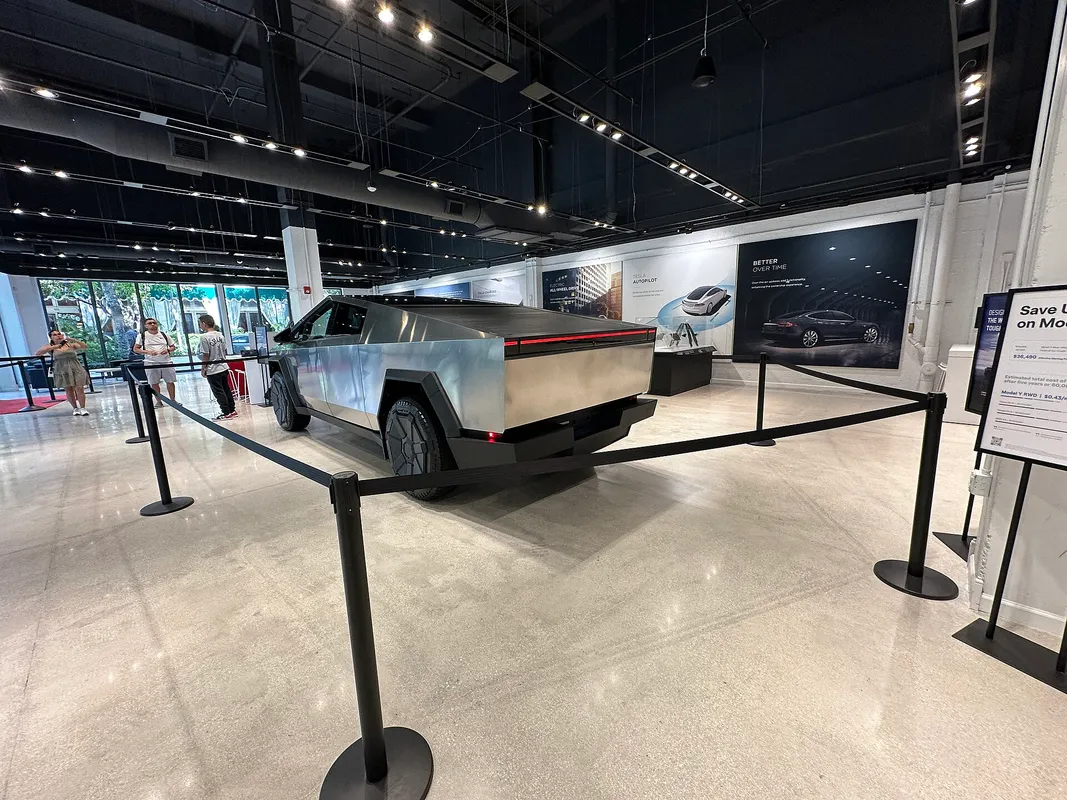

Why a pre-VIN quote is only an estimate
Before a VIN is assigned, an insurer prices on year, make, model and trim. That is enough for a ballpark and not enough to bind. Once a VIN exists, the insurer can see the exact build — including which options and driver-assistance hardware are fitted — and the number can move.
It moves for a specific reason, and it isn't the one people assume. Vehicle rating in the US leans heavily on claims experience and repair cost, not on horsepower. What drives an EV's rating is what a routine, unglamorous collision costs to put right: sensor and camera recalibration, bonded and aluminum structures that need approved equipment, and parts that come from one supplier.
The sequence that avoids the scramble
- At order time: get an indicative quote on the trim you configured. Treat it as a planning number, not a price.
- The moment the VIN appears in your account: take real quotes. This is the trigger, not the delivery appointment. On a short-notice delivery offer, the VIN may only precede handover by a few days.
- Bind the policy effective on the delivery date, not on the date you buy it. You can't drive away without active coverage, and Tesla will ask for proof at handover.
- If you're adding to an existing policy: confirm the effective time, not just the date. A policy that starts at 12:01 a.m. and a handover at 9 a.m. are compatible; the reverse is not.
- Send the declarations page to whoever needs it before the day, so nothing depends on cell reception in a delivery bay.
The four things that actually move your number
- Where the car sleeps. ZIP code is one of the strongest rating factors in US auto insurance, and it is doing more work than the badge on the car.
- Your record and, in most states, your credit-based insurance score. A handful of states restrict or prohibit the use of credit in auto rating; most permit it. If your state permits it, it's likely a bigger lever than the vehicle.
- Your limits and deductible, which are choices rather than facts. Raising a deductible lowers the premium predictably; the question is whether you could pay it in the week you needed to.
- Whether the insurer wants EVs. Carriers differ markedly, so the spread between the cheapest and most expensive quote is often wider than for a comparable gas car. Read the shape of the whole set of quotes, not just the top line.
Two coverages worth deciding on deliberately
Gap coverage. If you financed with a small down payment over a long term, the loan balance can exceed the car's actual cash value for a period. Gap covers that difference in a total loss. It's cheap, it's optional, and it's the coverage people most often wish they'd taken.
Loss-of-use / rental. Worth checking the per-day and aggregate limits rather than just confirming you have it. Repairs on cars that need an approved facility can run longer than a standard rental allowance assumes — see the companion piece on what happens after a collision.
What we're deliberately not telling you
A number. There is no honest average premium for "a Tesla" — rating is individual to the point where a national figure would mislead almost every reader. Any page that gives you one is guessing.
The useful substitute takes ten minutes: run one quote as a baseline, then change one variable at a time — the other trim, your real annual mileage, one step up on the deductible, adding an experienced second driver. Five runs tells you which lever is doing the work on your quote, which is worth more than anyone's average.
Where the referral sits in all this
Nowhere, and that's the point. The referral benefit — 3 months of free full self-driving (supervised) in North America — attaches when you pay the order fee, and no insurance decision affects it in either direction. It also doesn't offset a premium: it's a one-time trial, not an annual saving, and treating it as a running-cost reduction is the most common way people over-estimate the first year.
If you haven't ordered yet
steven787345
Attaches 3 months of free Full Self-Driving (Supervised) to a new order.
Open Tesla with the code applied →The link opens Tesla's official store with the benefit pre-filled. Always confirm it shows before you order.
For the current reward and what stacks with it in your state, see the US country page; the mechanics are in the how-it-works guide.
More on this: how the referral program works · US country page.
Disclosure: I'm an independent Tesla owner, not affiliated with or endorsed by Tesla, Inc. If you order using my code or link above I may earn Tesla Credits — that costs you nothing and doesn't change your benefit.